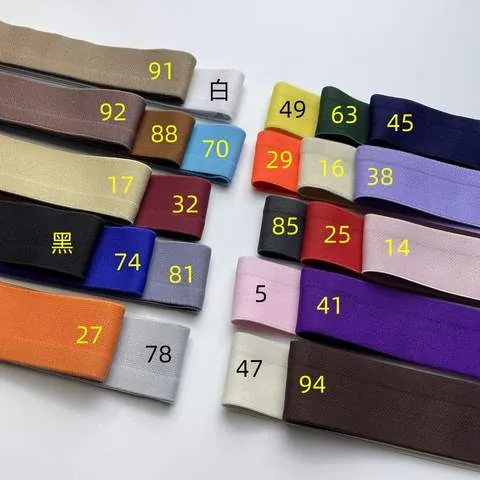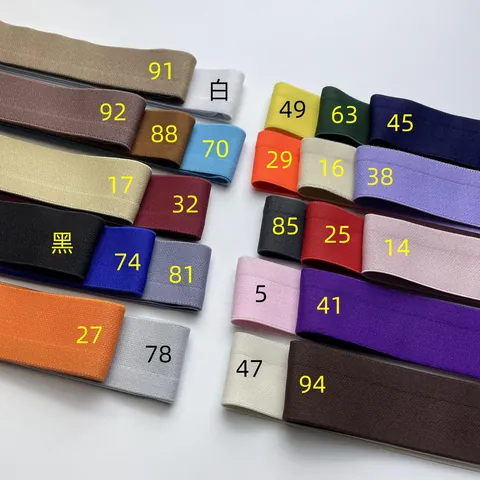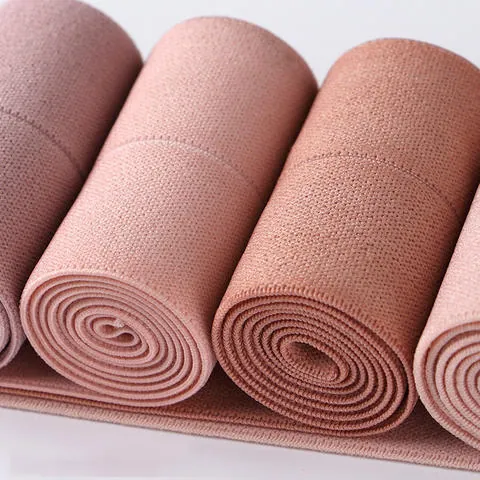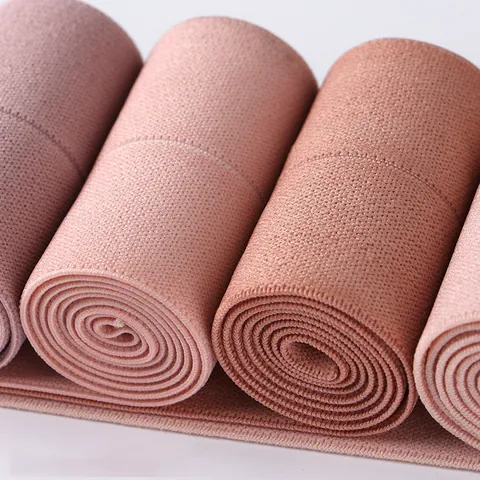
What is fold-over elastic?
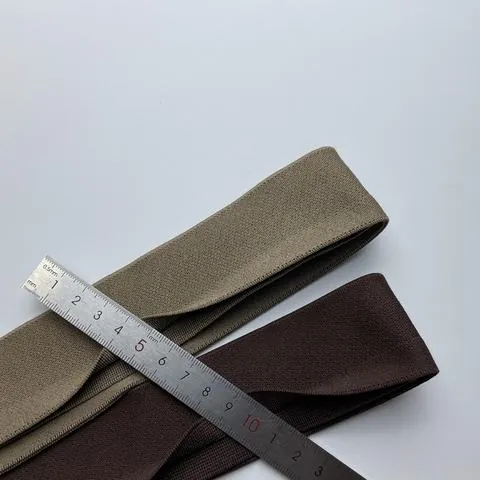
Fold-over elastic has a slightly thinner line down its centre so it folds neatly in half over the fabric edge. One face is often shiny and the other matte. It binds and finishes the edge at the same time, so it is used on lingerie, babywear, swim and activewear necklines, headbands and hair ties. Common widths are about 15–16 mm (5/8") and 25 mm (1") before folding.
Knitted vs woven vs braided elastic — what's the difference?
| Knitted | Woven | Braided | |
|---|---|---|---|
| When stretched | Keeps its width | Keeps its width, firmest | Narrows |
| Sew through it? | Yes | Yes | Better in a casing |
| Feel | Soft | Firm, holds shape | Light, lengthwise ribs |
| Typical use | Lightweight garments, lingerie | Waistbands, heavy fabrics, bags | Sleeves, hems, casings |
What is jacquard waistband elastic?
Jacquard elastic has a pattern or logo woven in on the loom, so it cannot wash off. It is the exposed waistband on underwear, boxers and activewear. Custom jacquard logos are made to order — at KAYA from 3,000 metres, with sampling in 12–15 days.
How wide should waistband elastic be?
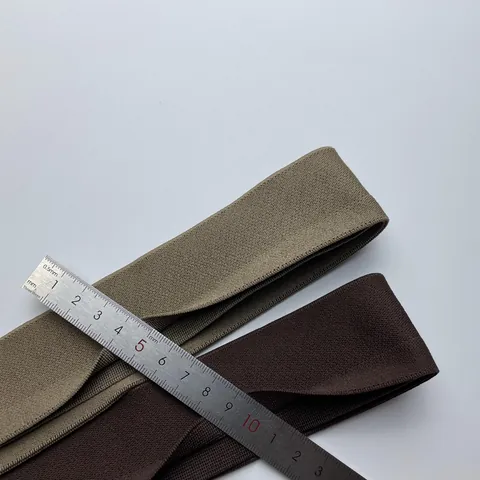
Narrow elastic (6–12 mm) is for sleeves, cuffs and lightweight casings; 20–30 mm is the usual range for trousers, joggers and skirts; 35–50 mm and wider is for exposed and supportive waistbands. Choose the width first, then the stretch and recovery — and test on your fabric, because the same elastic feels different in a jersey and a twill.
Every elastic product page lists its width, material and MOQ.
Quick answers
Is fold-over elastic the same as bias binding?
No. Both finish a raw edge, but fold-over elastic stretches and recovers, while bias binding is a non-elastic fabric strip that only follows curves.
Can elastic be dyed to my colour?
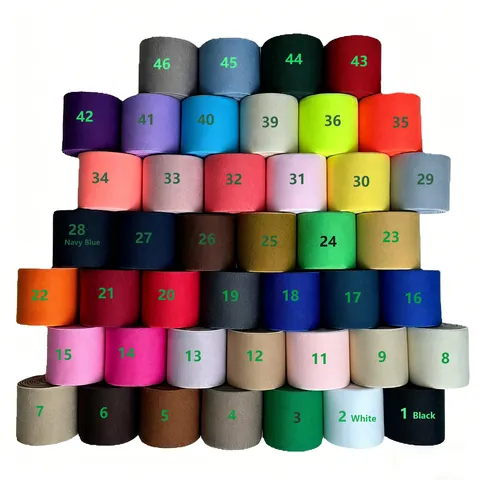
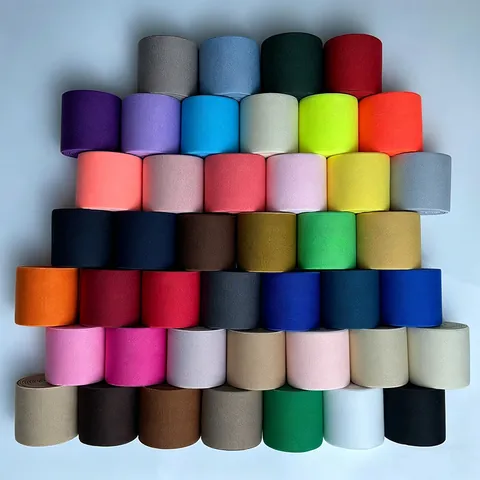
Yes. Stock colours are reordered by colour number; custom colours are matched to your Pantone or swatch.
Last reviewed 2026-11-16 · Related ranges: Elastic Bands