Single fold vs double fold bias tape — what's the difference?
| Single fold | Double fold | |
|---|---|---|
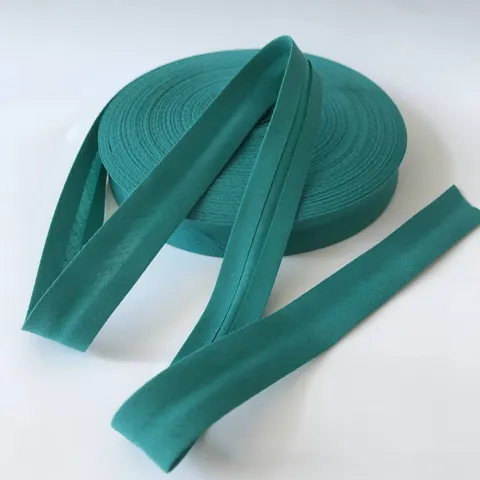
| Folds | Both long edges pressed to the centre | Single-fold pressed again in half |
| Use | Facings and hems — tape sits on the inside | Binding — tape wraps and shows on both sides |
| Look | Usually hidden | Visible contrast or matching edge |
How is bias tape width measured?
Bias tape is usually named by its finished folded width. A 12 mm (about 1/2") double-fold tape covers 12 mm on each side of the edge. Common finished widths run from about 6 mm to 25 mm. If you are matching an existing garment, measure the visible width of the binding on one side.
What materials is bias tape made from?
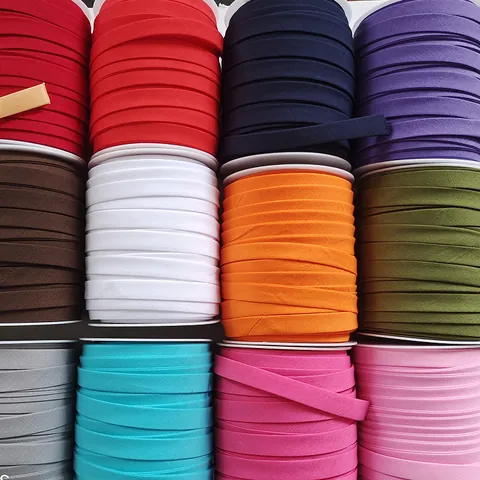
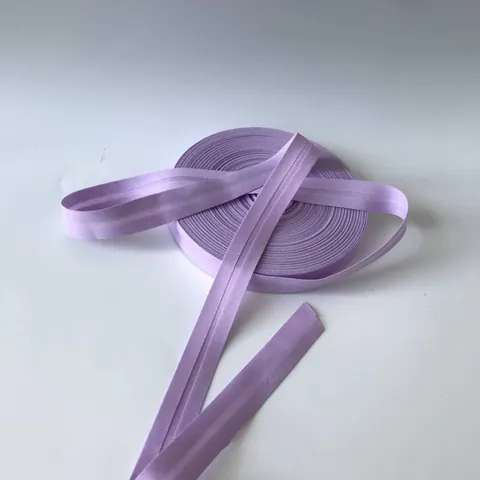
Polyester-cotton is the everyday choice: it presses well and stays colourfast. Cotton suits quilts and natural-fibre garments; satin bias tape gives a glossy edge on lingerie and eveningwear. Stretch knit binding is used on jersey.
What is piping, and how is it different from bias binding?
Piping is a bias strip folded around a cord and sewn into a seam, so a raised, rounded line shows along the edge. It defines seams on cushions, bags, pockets, collars and uniforms. Binding finishes a raw edge; piping decorates a seam. Piping is specified by the cord diameter (for example 2–5 mm) and the lip width that is sewn into the seam.
What should I specify when ordering bias tape?
- Single or double fold, and finished width
- Material (polyester-cotton, cotton, satin)
- Colour number or Pantone
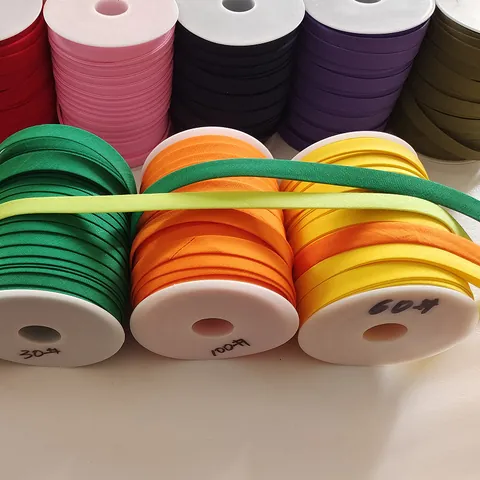
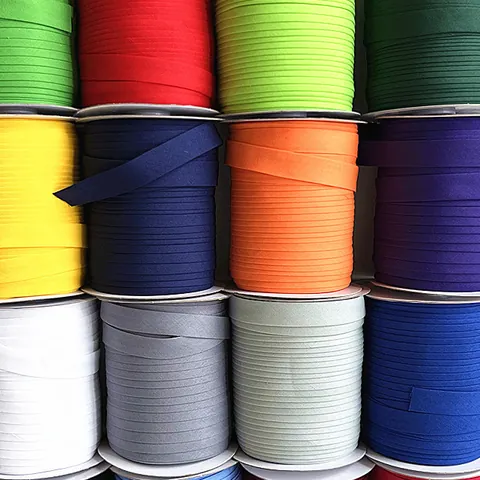
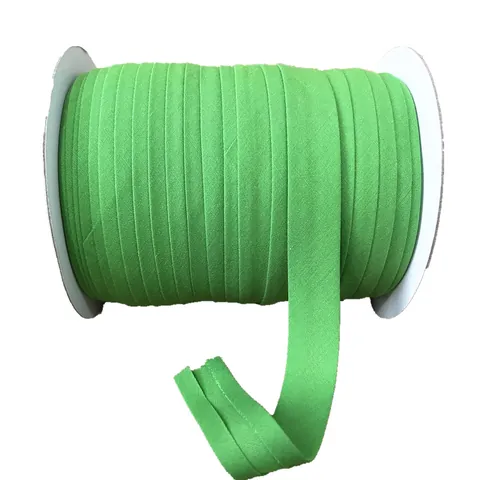
- Packing — rolls, cards or bulk reels, and length per roll
Browse piping and bias binding; stock colours start at low MOQs on each product page.
Quick answers
Why is bias tape cut on the bias?
Fabric cut at 45° to the weave has natural give, so the strip can curve around necklines and armholes without puckering.
Is bias binding the same as bias tape?
Yes — bias binding is the common UK name for the same product.
Last reviewed 2026-11-16 · Related ranges: Piping & Bias Binding